Building Refuge: On Finishing a Manuscript and Not Feeling Finished
Dispatches from Koffee With Kafka, writing fiction, and the psychological architecture of illustrating grief.
You might imagine that handing off a finished manuscript is the moment a writer relaxes, unspools, and soaks up a little cinematic afterglow. You hit that final period, send the document through the ether, and picture yourself rising serenely above the grind—free, validated, maybe even “seen.” A glass of something cold. Sunlight through a window you finally have time to notice.
But the truth, as ever, is messier.
A few weeks ago, I had sent the Koffee With Kafka manuscript to my editor, Shaun, and what I felt was less victory lap than post-convoy debrief—that specific flatness of a soldier returned from war, still flinching at car doors, still sleeping with one eye open in a quiet house. Mission technically complete, cargo delivered, but my body still on alert, scanning for phantom threats, replaying the uncertain moments. The inbox sits quiet in a way that feels less like peace than like held breath. The story may have reached a checkpoint, but my nervous system hasn’t gotten the memo.
Lately, as the inbox takes a breath and the dust of the manuscript settles, something has sharpened rather than softened. I have waited long enough for permission that was never going to come—and I mean that in the most literal sense: I counted the years, I watched the doors, I studied the gatekeepers. The creative urge does not wait. It does not knock. It builds pressure in the dark and leaks out at 3 a.m. and finally, if you ignore it long enough, it stops asking and starts taking—especially after years of watching the work disappear into silence, or worse, into someone else’s pocket.
Somewhere in the ongoing act of writing, drawing, dreaming, and animating Franz Kafka along with a very familiar protagonist, I stopped looking for an open door. I stopped looking for a door at all. I am building the house myself, and I have already poured the foundation.
The Anatomy of True Sanctuary
It turns out that “sanctuary” isn’t something anyone awards you. It’s something you find yourself already inside of, once the noise dies down—still breathing, still standing, surrounded by the wreckage you somehow made it through. Through the months of Koffee With Kafka, drafting and redrafting, wrangling a visual world from years of Kafka-haunted dreams (literally: since 2018)—the obsidian corridors, the bureaucratic fog, the doors that open onto other doors—I realized my protagonist and I were living parallel blueprints.
For the protagonist, M, safety means a space devoid of unspoken bargains—a room where existing doesn’t require justification, where brokenness isn’t interpreted as failure, where no one is keeping score on a clipboard just out of view. Too often, the gatekeepers of art construct spaces that feel less like rooms and more like auditions: every entrance conditional, every exit monitored, the air faintly charged with the threat of being “too much.” What M needs—what I needed—is a room with no such charge. The only test: whether you can be yourself at full volume, and whether the walls hold.
For me, the silence was never neutral—it was a verdict, delivered repeatedly, by people with more money than imagination and a cunning predisposition for knowing which stories to quietly absorb into their own portfolios without crediting me at all. I have written through that. I have rebuilt from it more than once. What I know now, with the particular certainty of someone who has run out of other options, is that the only refuge that cannot be taken is the one you raise with your own hands—no deed, no approval, no audience assembled at the door to rule on whether you’ve suffered enough to deserve the key.
The Dual Architects of Refuge
Within the manuscript, safety is constructed—deliberately—by two distinctly drawn figures: Franz and Sebastian. Neither arrives with a solution or a stretcher. What they build instead is harder to name and rarer to find: a space with no ambient hum of expectation, no fine print, no exit clause triggered by being too much or not enough. The gift they offer M is not rescue. It is the more difficult thing—a room that does not require her to earn it.
The Psychic Shelter
Franz is the architect of intellectual and spiritual sanctuary—a mind that sees, questions, and sometimes destabilizes, but never punishes. He is the figure who stays in the room after the difficult thing is said. He is the figure who hands you a difficult book and waits, not to grade your reaction, but simply to see what surfaces. There is no flinch in him, no fine-tuning of your affect to match the room, no subtle recalibration of how he looks at you. He takes M—and, under the hood, me—at face value: no performance required, no subtext to manage, no careful rationing of how much is too much to show. He witnesses M the way good lighting witnesses a room: without agenda, without the threat of what it might expose.
The Embodied Anchor
Sebastian, on the other hand, grounds the aftermath. Where Franz engages, Sebastian simply remains—a shoulder on the doorframe, a body that does not leave. His safety is the kind that doesn’t announce itself: a hand that doesn’t reach, a silence that doesn’t press, a presence that asks nothing of the air it shares. No transaction, no fine print, no quiet ledger being kept somewhere hidden for a case that may one day come to trial. Some days I’ve written him less as a character and more as a missing element I want creative life to promise: a figure on the periphery, facing outward, and standing watch over what’s most exposed, guarding what’s most vulnerable without ever naming it aloud.
Permission: Revoked, by Me
Here’s the part I didn’t expect to arrive at: I have counted the years. I have watched the doors. I have sat in the waiting rooms of institutional grants, of “connections,” of approvals from non-creative functionaries who never read past the first page—and I have watched stolen stories quietly reappear in other people’s work, reupholstered, unattributed, the seams hidden. I have run out of space to wait, so I no longer request permission to do what’s mine to do.
The stories, the characters, the dark, Gothic corridors and bureaucratic fog of the visual world—they have made themselves insistent in the specific way that a leak in the wall makes itself insistent: first a stain, then a smell, then the plaster giving way at 3 a.m. Koffee With Kafka isn’t just a novel or a script; it’s the sediment of every late-night image and dreamworld conversation I’ve scrawled before I lost it since 2018, every narrative I’ve had to construct from the floor, rebuild from the studs, or resurrect from what seemed like dead-ends. It’s the sum of every nocturnal nudge that wouldn’t resolve, every narrative I’ve had to defend from a standing position with no backup. I am building this because I have no remaining alternative. The other option is silence, and I have already lived that room. I know exactly what it costs.
The Work That Remains
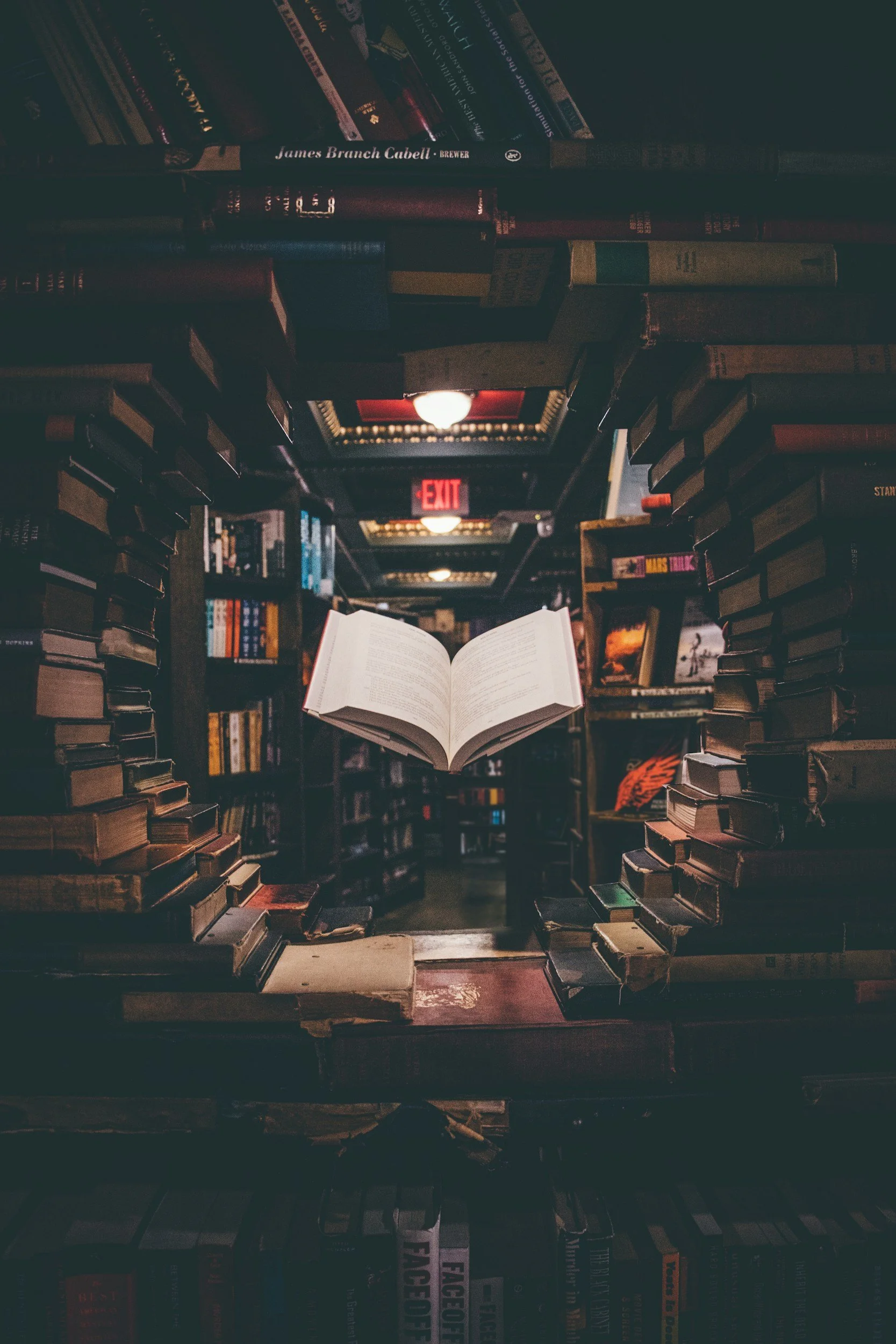
Handing the text to Shaun shifted some weight—not all of it, but enough to feel the difference in how I move through the studio now. There’s freedom in admitting a phase is over, but there’s also a strange vigilance that lingers, the way your hands stay braced on the wheel after hydroplaning during a heavy rainstorm on a highway. As the manuscript rests elsewhere for now, my studio is alive with unfinished work: reference frames pinned to the wall, the trailer in pieces on the timeline, M’s face redrawn a dozen times in search of the exact microexpression that lives between fear and refusal. Visual development gives me the agency no one awarded. I claim it daily, frame by stubborn frame, corridor by haunted corridor.
This is the aftermath, and it is also the next beginning. The sanctuary—on the page, on the screen, in the particular silence of someone who has stopped waiting for a crew—still needs building. Hotel basements still need drawing. Doors still need to open onto other doors. But the master key is cut, and it is mine, and I have already found the lock it fits, and I know the exact resistance of it, the precise moment before the tumblers give.
This is what it means to create fearlessly—to sit across from Kafka, sip your bitter coffee, and claim the conversation as your own. It is not his labyrinth anymore, nor the towering specter of bureaucracy or silent dread. It is yours and mine as creatives who live traversing the dreamworld and translate it into being. The halls of such dreams are drawn with your hands; the doors open at your will. The sanctuary is built in your image—words, brushstrokes, code, notes, dreams, all mingling.
Reclaiming agency is not the act of erasing shadows but learning to walk through them, mapping them until they belong to you. As you write, draw, and unlock, the fear dissipates, not because it simply disappears, but because you chose to meet it—on your page, in your voice, over your coffee, where even the muse must listen.