Dreaming with Franz: How a Midnight Encounter Sparked "The Art of Dying"
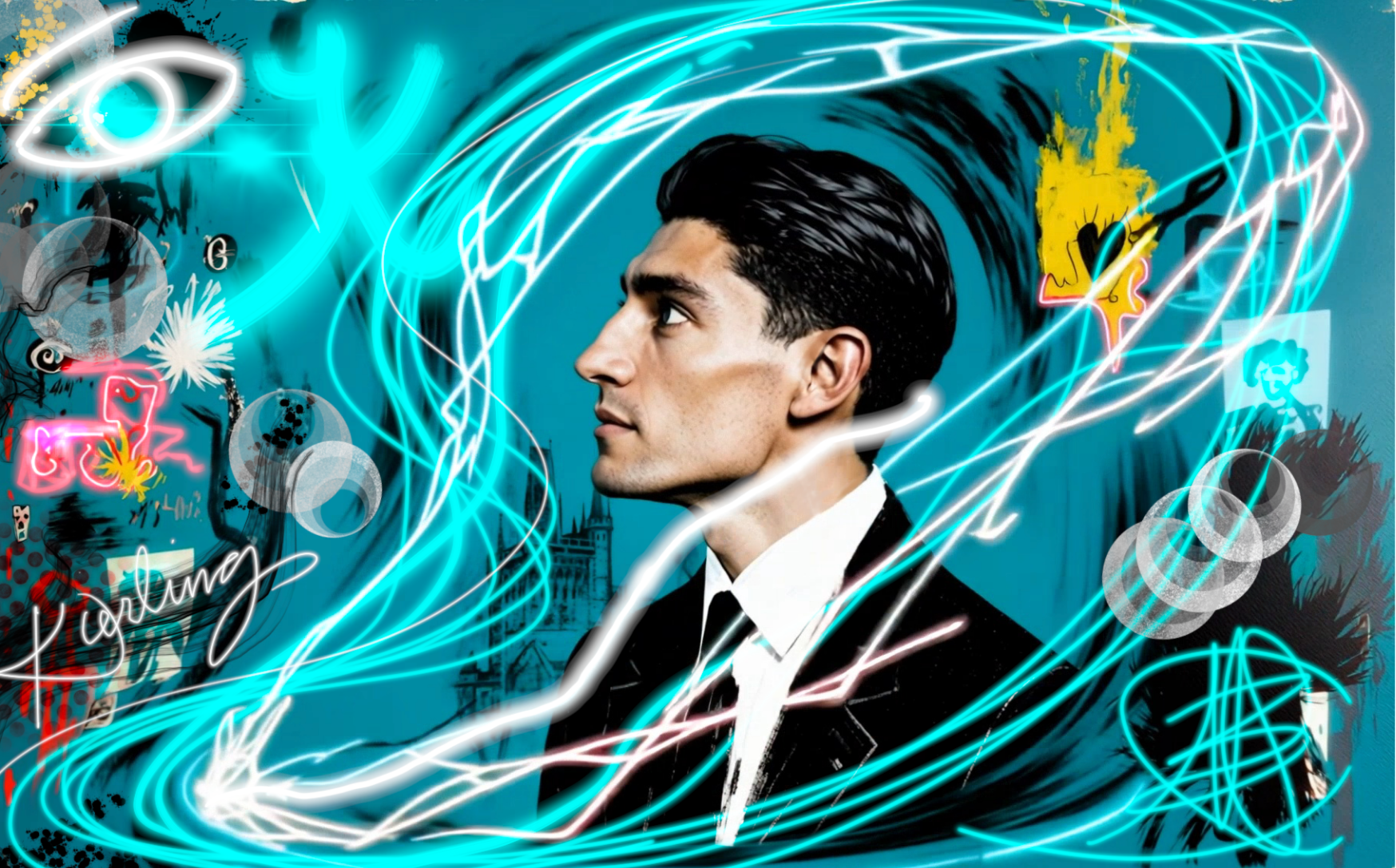
“The Art of Dying” (2026)
One night, on 30 March 2026, I found myself in a brightly lit room with Franz Kafka. The fluorescent lights cast harsh shadows across his gaunt face, highlighting the hollows beneath his cheekbones. His eyes—dark as wet sapphire ink—followed my movements with gentle curiosity rather than the cold distance one might expect from a literary giant. The white hospital sheets crumpled beneath his thin fingers as he gestured for me to sit closer.
In the dream, I perched on the edge of his bed as nurses administered his camphor oil injections for tuberculosis treatment. Each labored breath he took seemed to transfer into my own lungs—a visceral heaviness like wet cement slowly hardening in my chest. When my breathing constricted in sympathetic rhythm with his, Kafka tilted his head and explained his condition with the precision of a watchmaker describing gears. Despite his blue-tinged lips, his voice remained melodious, almost playful. He described the feeling of drowning in dry air while his fingertips traced invisible patterns on the bed sheet. The way he spoke of his fading life—detached yet intimate, analytical yet poetic—transformed his suffering into something resembling a delicate watercolor study of mortality itself.
As my own lungs seized in sympathetic spasm, he calmly explained his condition in a voice like autumn leaves rustling. Yet, despite the morbid reality of the situation, Kafka was incredibly charming, his thin fingers gesturing with unexpected grace. He described his physical suffering with the light, airy demeanor of someone discussing the weather, his Czech-German accent lilting musically around each carefully chosen word. He spoke of his fading life as if he were critiquing a painting or composing a melody, occasionally pausing to suppress a cough that rattled deep within his chest. He was showing me, quite literally, the art of dying.
This profound nocturnal meeting struck me like a tuning fork against bone, reverberating through my consciousness. It instantly sparked the concept for my newest art piece, aptly titled "The Art of Dying."
If you follow my work, you know this is not my first midnight conversation with him. For years, Kafka has appeared in my dreams, materializing like woodsmoke in the corners of invented rooms. He never shows up as the brooding, untouchable author history often paints him to be—all sharp angles and hollow eyes. Instead, he arrives as an endearing man—vulnerable, witty, conversational, and surprisingly warm. His lips often curled into a half-smile that transforms his entire face with eyes that crinkle at the corners when he laughs, a voice that rises and falls like a cello suite, and hands that gesture with the precise elegance of a conductor.
These midnight encounters inspired every page of "Koffee With Kafka," infusing the dialogue with his peculiar blend of self-deprecation and startling insight. The banter throughout the novel flows with the familiar, chatty cadence of old friends because that is exactly how we interact in the dreamworld. I want to capture the person behind the pages, to have you sit down with Franz, the human being, rather than Kafka, the literary idol.
"The Art of Dying" pulls directly from the visual and emotional textures of that dream—the blue-white hospital light, the rumpled sheets, the labored breathing that somehow carried musical notes. It explores how we can find beauty in our deepest suffering, like finding iridescent beetles beneath a rotting log. Kafka did not hide his pain in the dream; he transformed it into something poetic, cupping it in his palms like a fragile bird. This new piece blends my existing Kafka sketches with digital artworks to reflect that delicate balance between suffering and transcendence. It aims to serve as a visual study of sensitivity, transformation, and the strange grace found in letting go, like autumn leaves releasing from branches.
We often view illness and suffering as things to look away from, to shroud in euphemism and antiseptic white. Kafka, however, invited me to look much closer, to examine the marbled patterns of veins beneath one’s skin. He showed me that even in our final, most fragile moments, when breath comes shallow as a whisper, we hold the power to create meaning.
Franz Kafka died at noon on June 3, 1924, at the Dr. Hoffmann Sanatorium in Kierling, Austria. He passed away at the age of 40 from laryngeal tuberculosis, with Dora Diamant and his friend/physician, Robert Klopstock, by his side.
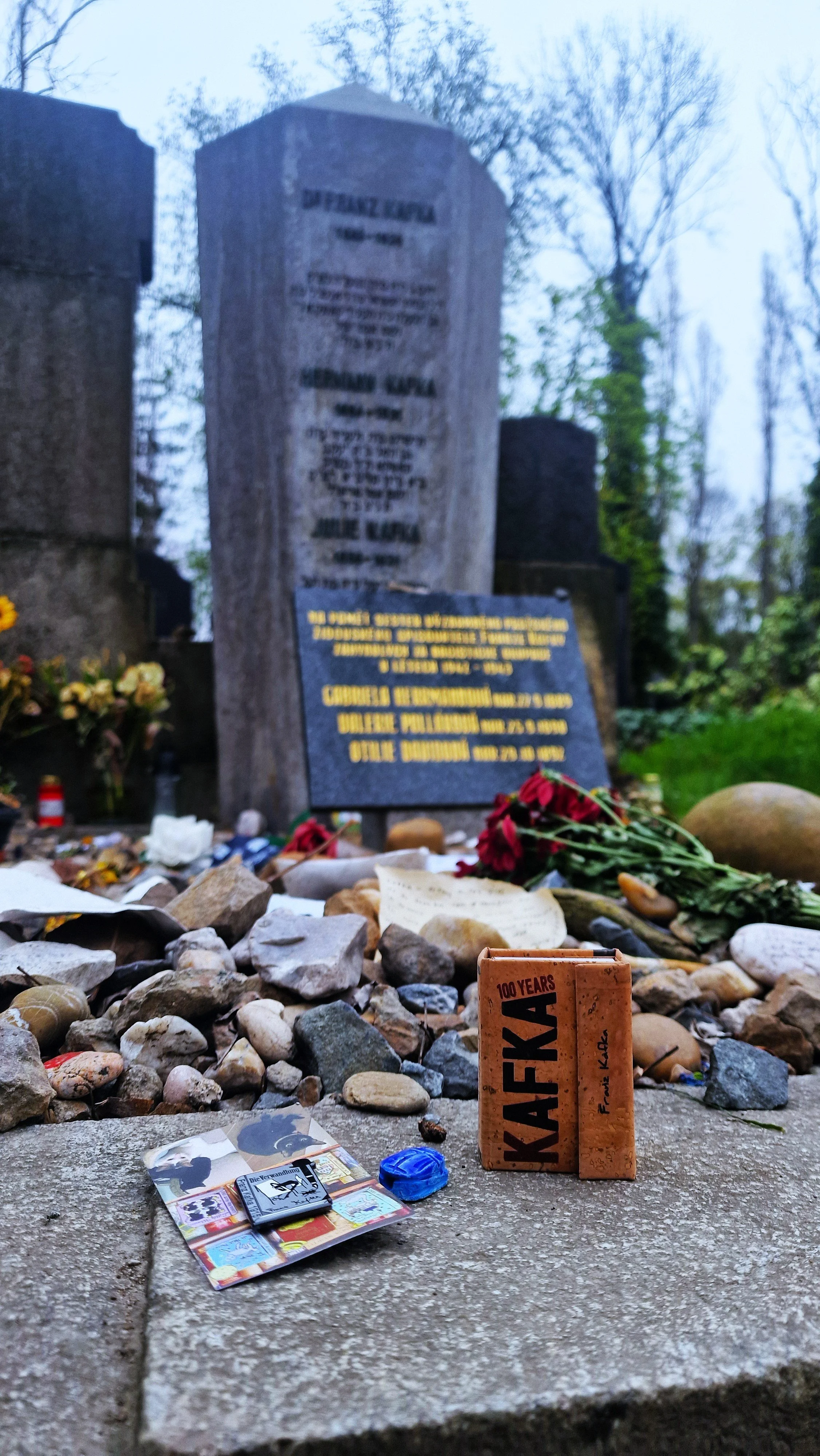
Franz Kafka’s Grave in Prague
From 3 June 2026, the anniversary of Kafka's passing, through 3 July 2026, his birthday, I plan to celebrate his legacy by posting something about him every day. This reflective practice will coincide with the final illustrations and edits of my upcoming novel, Koffee With Kafka, a project that unexpectedly evolved into a blend of The Midnight Gospel's surrealism, In the Mood for Love's aching elegance, and a touch of Fleabag's candid introspection. Kafka has shaped this creative journey in profound ways, teaching me to lean into the absurd, the intimate, and the inevitable fragility of existence. It took time to truly embrace this deeply niche facet of my process, but in doing so, I’ve found a voice that feels both authentic and alive with purpose.
Today, as we prepare to attend the funeral of our friend’s father, Felice, in Milan, I find myself reflecting on the uncanny connections life weaves. Felice and his wife, Milena, often remind me of Kafka's poignant correspondences in Letters to Felice and Letters to Milena. There’s a poetic symmetry in their names—an echo of Kafka’s intense, vulnerable exchanges, where love, longing, and the complexities of human connection were laid bare. It’s as though their lives, even unknowingly, carry a fragment of Kafka’s world, blurring the lines between literature and reality. Inspiration, it seems, doesn’t just arise from the dreamworld, but often finds us through the people and stories we encounter, anchoring us in that strange, collective weave of art and life.
Attending a funeral on the anniversary of Kafka's death feels both terribly sad and profoundly poetic. It serves as a poignant reminder of life's fleeting moments, its delicate impermanence mirrored in Kafka's own reflections on mortality and meaning. Standing there, the weight of loss mingles with a deep sense of reverence, urging us to consider what and who we choose to hold dear amid the relentless passage of time. It’s in such moments that the fragility of existence feels both unbearable and beautiful—a testament to the emotional power of human connections and the enduring resonance of shared stories.
This process felt less like creating art and more like translating a quiet message from an old friend, whispered across the veil between worlds. I look forward to sharing more about "Koffee With Kafka" with you soon...